Organising a match schedule is one of the biggest challenges for any amateur football team, whether it’s 11-a-side, 7-a-side or five-a-side.
Kick-off times change, pitches get switched, fixtures clash with other commitments, and results often get lost over the course of the season. These are common problems in grassroots football.
When match information is scattered across messages, group chats or simply remembered by a few players, it becomes much harder to keep the team organised.
A well-structured match calendar does far more than just show when the next fixture is. It helps you manage the squad, keep players informed and build a clear record of the season.
Teams that organise their fixtures properly usually operate more smoothly both on and off the pitch.
Why Organising Fixtures Matters in Amateur Football
At grassroots level, organisation can make the difference between a team that runs well and one that constantly struggles with availability and communication.
Most players balance football with work, studies or family commitments. If fixtures change frequently or information is unclear, it often leads to:
- players missing matches
- late arrivals on match day
- difficulty fielding a full squad
- confusion about kick-off times or locations
Another common issue is the lack of a proper match record.
Without a clear history of games, it becomes difficult to track things like:
- how many matches the team has played
- the team’s win rate
- which players have featured most often
- who scored the most goals
- how the team performed across the season
For any club that wants to improve performance or appear more organised, keeping fixtures and results properly recorded is essential.
How to Create a Match Schedule for Your Team
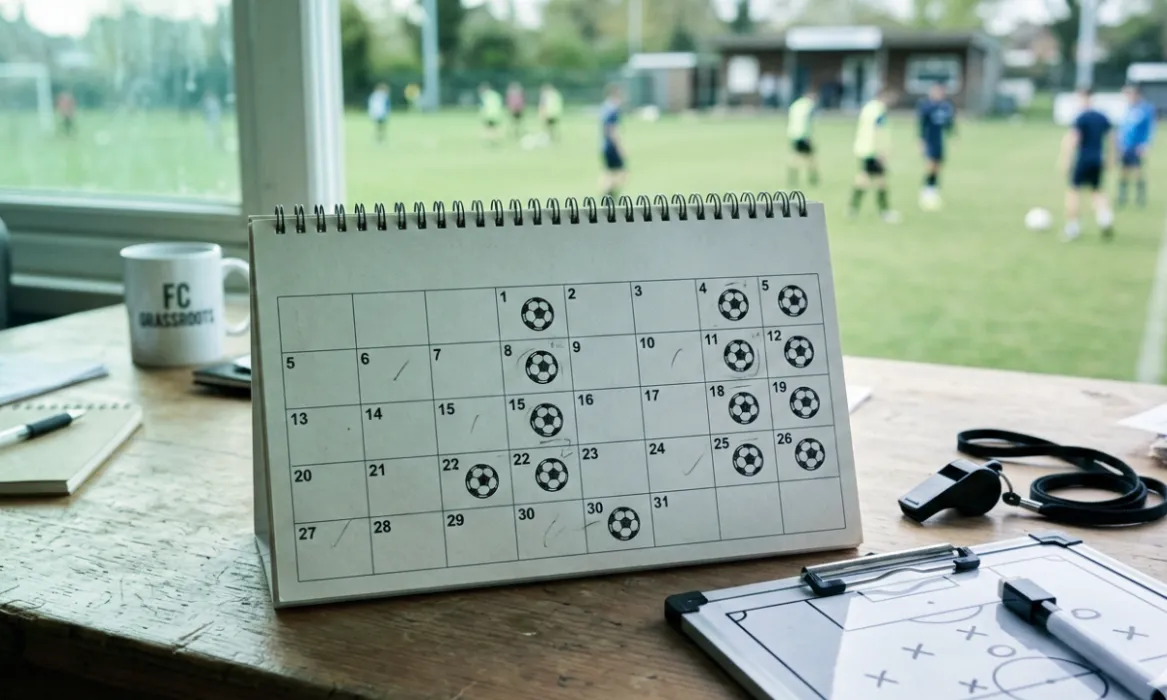
The first step is to centralise all information in one place. Instead of relying on scattered messages or reminders, the team should have a clear fixture calendar where every match is listed.
Each match entry should include:
- date of the fixture
- kick-off time
- pitch or venue
- opponent
- competition or type of match
This ensures every player knows exactly when and where the next game will take place.
It’s also useful to include all types of matches, such as:
- league fixtures
- cup matches
- friendlies
- pre-season games
Even friendly matches help build a full picture of the team’s season and can provide valuable insight into performance.
Recording Results Is More Than Just the Scoreline
Many amateur teams only record the final score of a match — and sometimes not even that.
However, if you want to analyse performance properly, it’s important to collect more detailed information after each game.
Useful data to record includes:
- the final score
- players who appeared in the match
- goals scored
- assists
- yellow cards
- red cards
By keeping these details organised, you create a complete match history for the season.
This information allows you to understand how the team is progressing and recognise the contribution of individual players.
Football Statistics Help Engage the Squad
Once matches and results are properly recorded, team statistics start to emerge naturally.
Examples of useful team statistics include:
- total matches played
- wins, draws and losses
- goal difference
- unbeaten runs
- performance in specific competitions
At an individual level, statistics can track:
- appearances
- goals scored
- assists
- goal involvement per match
These numbers often motivate players and create a healthy level of competition within the squad.
Many players enjoy seeing their contributions reflected in real statistics throughout the season.
How Clubjourney Helps Organise Fixtures and Results
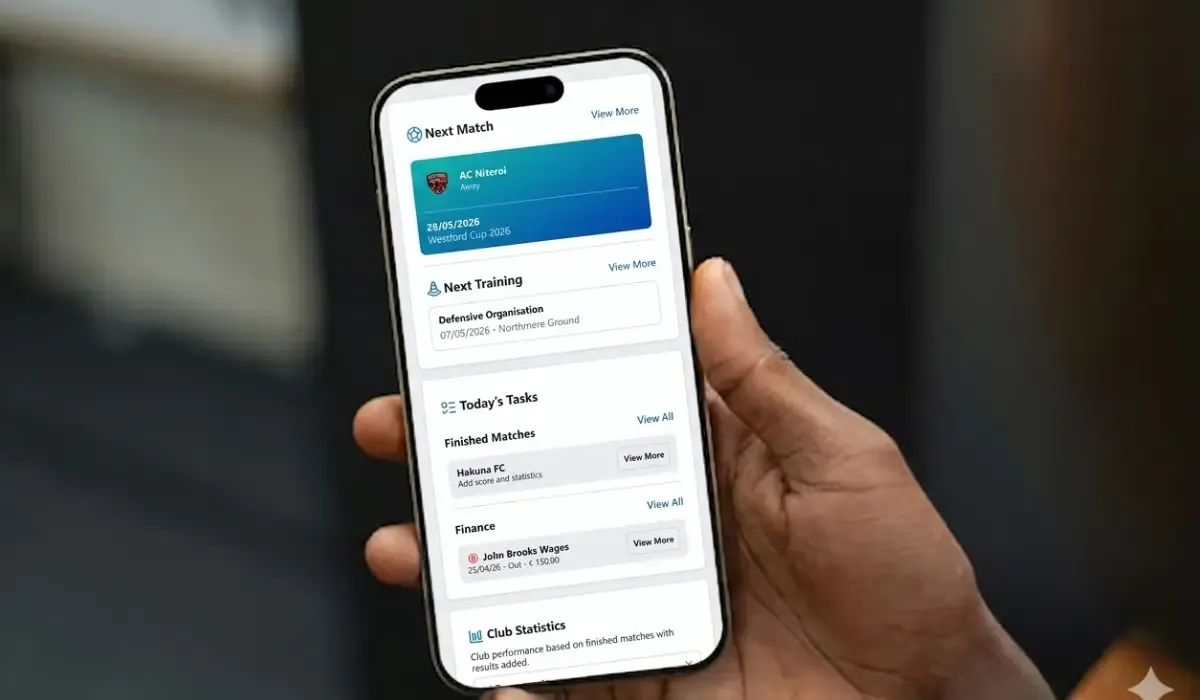
The Clubjourney management platform was created to help amateur teams solve exactly these types of organisational challenges.
With it, you can create a complete fixture calendar, where all upcoming matches are recorded and easily accessible.
The platform also allows you to organise matches across different squads, such as:
- the first team
- women’s teams
- youth squads
After each match, you can quickly update:
- the final result
- which players took part
- goals scored
- assists
- disciplinary cards
From this information, the platform automatically generates team and player statistics.
Performance Reports for Teams and Players
Another useful feature is the ability to generate detailed reports.
You can analyse team performance by filtering data based on:
- a specific competition
- a certain period of the season
- a particular squad
These reports help managers and organisers better understand both collective and individual performance.
They can also be useful when sharing updates with supporters, sponsors or the wider club community.
An Organised Fixture List Reflects a Well-Run Team
In amateur football, organisation is one of the clearest signs of a well-managed club.
A clear match schedule combined with properly recorded results helps your team:
- improve communication with players
- track performance over time
- keep the squad more engaged
- build a reliable history of the season
Regardless of the level your team competes at, organising fixtures and results is an investment in the future of the club.
With the right tools in place, this process becomes simple and quickly turns into a natural part of running the team.